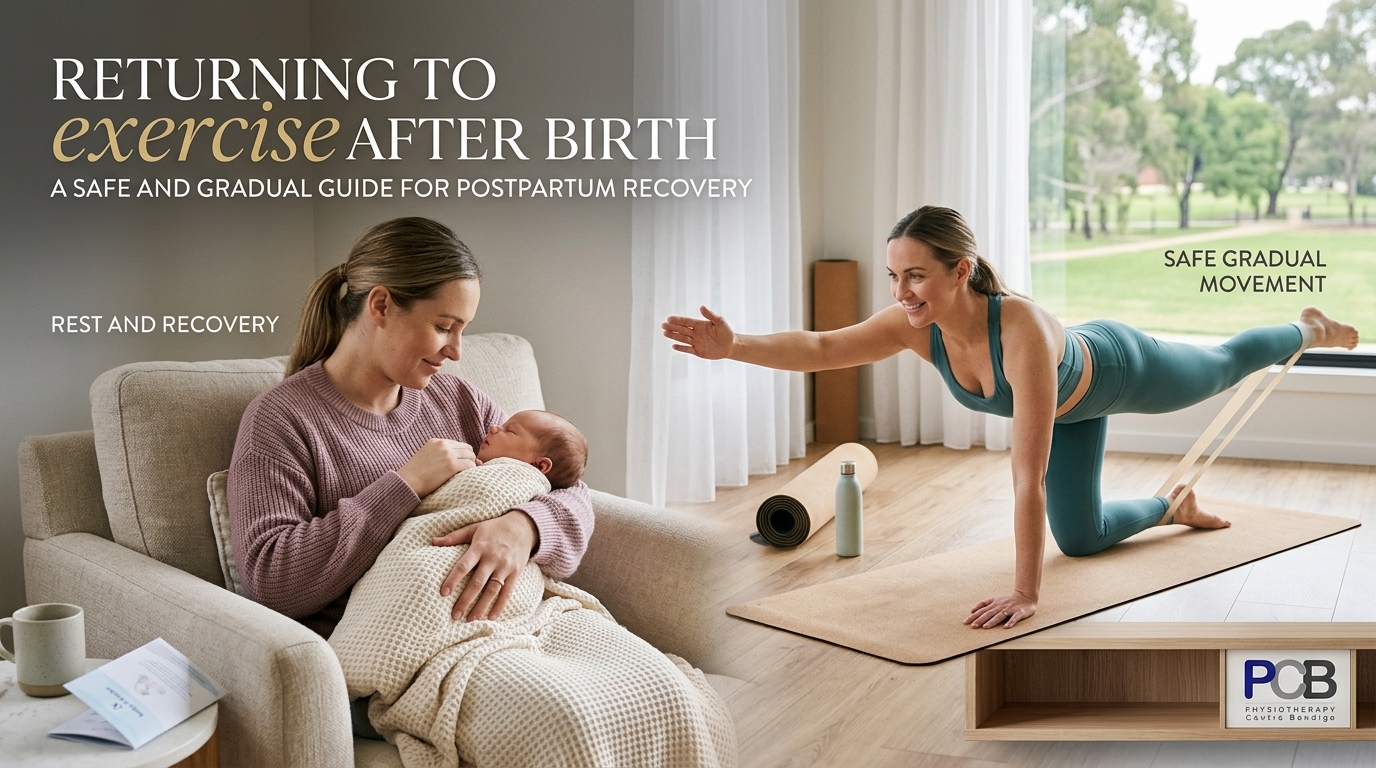
Returning to Exercise After Birth: A Complete Guide to Safe and Gradual Recovery
Your postpartum journey is unique. Here’s how to return to exercise safely, at your own pace.
Medically reviewed by Pelvic Health Physiotherapists | Last updated: September 2026
Introduction: Your Postpartum Journey Is Unique
Everyone’s postpartum journey is different. Whether you’re a first-time mom or welcoming another baby, returning to exercise after birth requires patience, self-compassion, and a willingness to listen to your body.
Before we dive in, remember these key principles:
- Listen to your body – it knows best
- Be guided by your symptoms – not by external expectations
- Focus on rest and recovery – healing takes time
- Avoid comparison – every birth and every body is different
Returning to exercise is a gradual process of rebuilding strength, confidence, and comfort—not a race to “bounce back.” The best recovery plan is one guided by your symptoms, your goals, and how your body responds.
Why Movement & Rest Matter After Birth
Pregnancy and birth place significant demands on your muscles, joints, pelvic floor, and core. Recovery takes time—often much longer than we expect or are told.
The first few weeks after birth are about giving your body the time and support it needs to heal while gradually rebuilding strength and confidence.
Movement Supports:
✅ Improving circulation and reducing stiffness
✅ Rebuilding strength and confidence
✅ Supporting your mood, energy, and mental wellbeing
✅ Helping you gradually return to everyday activities
Rest Is Just as Important
Rest is an equally essential part of recovery. Proper rest helps:
✅ Support tissue healing
✅ Reduce fatigue
✅ Improve recovery
✅ Prepare your body for increasing activity
Did You Know?
Research shows there is no single timeline for returning to exercise after birth. Every birth and every body is different.
While timelines can provide a helpful starting point, how you feel during and after movement is much more important than the number of weeks since birth.
Your body is your best guide. If symptoms increase, it may be a sign to slow down, modify your exercise, or seek professional support.
Where Do I Start?
Getting started after birth doesn’t mean jumping back into your previous exercise routine. Recovery happens in stages, and each stage helps prepare your body for the next.
Stage 1: Support Recovery
Birth – 8+ Weeks
Focus: Gentle movement, breathing, and rest
Activities include:
- 🚶♀️ Short walks
- 🌬️ Breathing and relaxation exercises
- 🧘 Everyday activities (housework, gentle stretching)
- ⏸️ Rest and recovery
- 🫧 Pelvic floor awareness*
Gently lift around the vagina and anus as you breathe, then fully relax.
Stage 2: Build Your Foundation
6 – 16+ Weeks
Focus: Gentle, progressive strength exercises
Activities include:
- 💪 Core, pelvic floor, and lower limb strengthening (e.g., gentle bodyweight Pilates)
- ⏱️ Increasing exercise duration
- 🚴 Low-impact cardio
- ⚖️ Gradual loading
Stage 3: Rebuild Tolerance for Impact
12 – 26+ Weeks
Focus: Gradually reintroducing higher impact activities
Examples of impact activities:
- 🏃♀️ HIIT
- 🏃 Running
- 🤸 Jumping
- 🏋️ Heavy strength work
Approach: Start small (e.g., walk-jog intervals) and gradually increase impact, intensity, and volume as your body allows.
⚠️ Important: Wait 3 months post-birth before commencing higher impact loads to allow for adequate recovery.
How Do I Know If I’m Ready?
Progression isn’t based on reaching a certain week postpartum. Instead, pay attention to how your body responds to movement. Feeling comfortable during exercise and recovering well afterwards are often the best signs you’re ready to gradually do more.
Stage 1 Readiness (Birth – 8+ Weeks)
You’re ready to progress when:
✅ Movement feels comfortable
✅ Symptoms are improving, not worsening
✅ Everyday tasks feel easier
✅ Your energy and confidence with movement are building
Stage 2 Readiness (6 – 16+ Weeks)
You’re ready to progress when:
✅ Comfortable with daily activities
✅ You can exercise gently without increased pain or pelvic floor symptoms
✅ You’ve built a foundation of strength
✅ You recover well after activity
✅ You feel ready to introduce more structured exercise
Stage 3 Readiness (12 – 26+ Weeks)
Signs you’re tolerating higher impact well:
✅ You can increase exercise without symptoms developing
✅ You recover well between sessions
✅ No ongoing pain, pelvic heaviness, or leakage
✅ Strength and confidence are improving
✅ Your body feels capable of handling increased demands
FAQs: Answered
Should I book a postpartum appointment ahead of time?
It doesn’t hurt to be proactive, especially if you experienced concerns during pregnancy. However, not everyone requires a check following birth. If you’re unsure, it’s always better to book and have peace of mind.
I had a caesarean. Does this advice still apply?
Yes, the same principles of rest, gentle movement, and progression apply. However, abdominal healing, pain, and wound recovery may affect your pace. Seek professional support if symptoms persist or recovery feels complicated.
I exercised regularly before pregnancy. Can I progress quicker?
Previous fitness may help, but it does not remove the need for tissue healing after pregnancy and birth.
Cardiovascular fitness can return faster than pelvic floor, abdominal, and musculoskeletal load tolerance. Let symptoms, strength, and recovery—not previous fitness alone—guide your progression.
What happens at a pelvic health physio appointment?
Your physio will discuss your birth, symptoms, and goals, then assess relevant movement, strength, and pelvic floor function. With your consent, this may include an internal vaginal exam to help guide an individualized treatment plan.
When Should I Get Support?
Getting support is a step forward, not a step back. Not everyone needs pelvic health clearance before returning to exercise.
Consider booking an appointment if you experience:
Pelvic Floor Symptoms
- Leaking urine, stool, or wind
- Urgency or trouble emptying
- Pelvic pressure, dragging, or heaviness
- Reduced bowel control
These may be signs of pelvic floor dysfunction or prolapse.
Symptoms with Movement
- Pelvic, perineal, or abdominal pain
- Pain with sex or vaginal insertion
- Difficulty activating or relaxing your pelvic floor
- Symptoms worsening with exercise
Early support can make a big difference to comfort and long-term recovery.
Delayed or Complex Healing
- Assisted (forceps or vacuum) or caesarean birth
- Significant tearing or ongoing pain
- Wound or birth complications
- Traumatic birth
These experiences can affect healing, and individual support can help you recover with confidence.
🚨 Seek Urgent Medical Care If You Experience:
- Chest pain or difficulty breathing
- Fainting, seizures, severe headache, or dizziness
- Fever or signs of infection
- Heavy bleeding or severe abdominal pain
- One-sided calf pain or swelling
- Thoughts of harming yourself or your baby
Call 000 (Australia) or your local emergency services immediately if you experience any of these symptoms.
Final Thoughts
Returning to exercise after birth is a journey of patience, self-compassion, and gradual progress. There’s no “right” timeline—only what feels right for your body.
Remember:
- Your body has done something incredible
- Healing takes time
- Every small step forward counts
- It’s okay to ask for help
Be kind to yourself, trust your body, and celebrate every victory along the way—no matter how small.
This guide is for informational purposes only and does not constitute medical advice. Always consult with your healthcare provider or pelvic health physiotherapist before starting any postpartum exercise program.
Have questions about your postpartum recovery journey? Share your thoughts in the comments below, or reach out to a qualified pelvic health professional near you.
References & Resources
- Australian Physiotherapy Association – Pelvic Health
- The Continence Foundation of Australia
- World Health Organization – Postnatal Care Guidelines
📞 For pelvic health support in the Bendigo region, call (03) 5442 4044.
About the Author
This guide was developed in collaboration with pelvic health physiotherapists to provide evidence-based information for new mothers navigating the postpartum period.


